
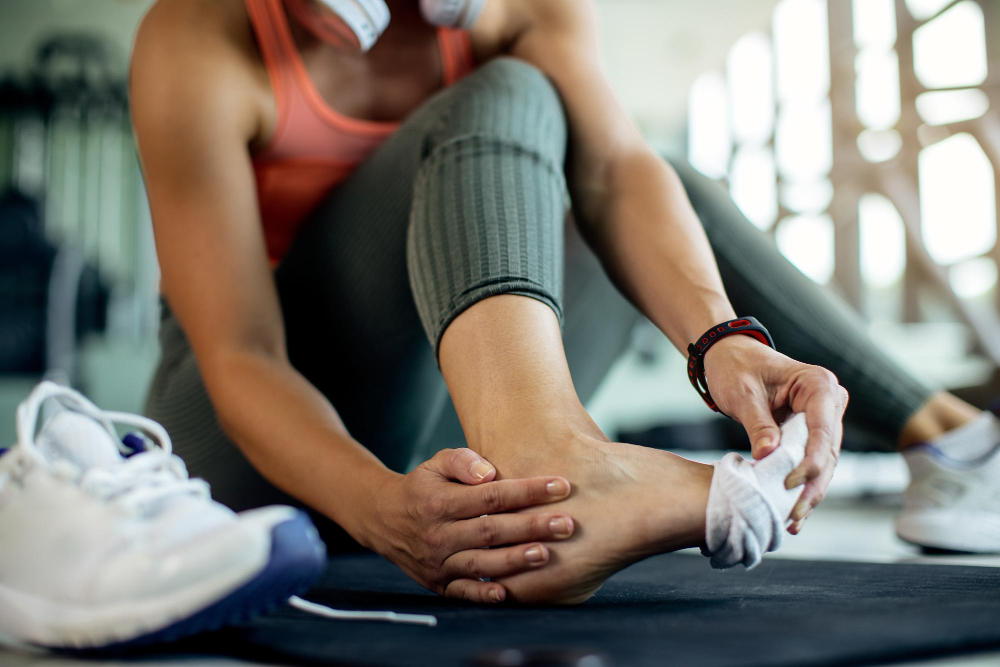
A sprain is an injury to a ligament. Ligaments are strong bands of connective tissue that connect one bone to another and help stabilize the joints.
A sprain occurs when a ligament is stretched beyond its normal range or partially or completely torn. Sprains commonly affect the:
- Ankles
- Knees
- Wrists
- Shoulders
- Neck
- Lower back
- Other spinal and extremity joints
Sprains may result from a sudden twist, fall, collision, awkward landing, or forceful movement.
The severity of a sprain may range from mild overstretching to a more serious ligament tear.
What Is a Strain?
A strain is an injury to a muscle or tendon. Tendons connect muscles to bones and help transfer force during movement.
A strain can occur when a muscle or tendon is overstretched, overloaded, or torn. Strains commonly affect the:
- Lower back
- Neck
- Shoulders
- Hamstrings
- Calves
- Hips
- Arms
- Other muscle groups
Muscle strains may develop suddenly during lifting, exercise, or an accident. They can also develop gradually from repetitive movement, poor posture, or overuse.
Sprain Versus Strain
Although the terms are often used interchangeably, sprains and strains affect different tissues.
A sprain affects a ligament.
A strain affects a muscle or tendon.
Both may cause pain, swelling, stiffness, weakness, tenderness, and reduced movement.
A physical evaluation can help determine which tissues may be injured and whether additional testing is needed.
Common Causes of Sprains and Strains
Sprains and strains may occur during everyday movement, exercise, work, or an accident.
Common causes include:
- Sports injuries
- Lifting heavy objects
- Sudden twisting
- Slips and falls
- Auto accidents
- Whiplash injuries
- Repetitive workplace movements
- Poor lifting technique
- Overexertion
- Inadequate warmup
- Awkward landings
- Rapid changes in direction
- Poor posture
- Prolonged sitting
- Muscle fatigue
- Previous injuries
In some cases, a minor movement may cause an injury when the muscles are fatigued, tight, or unprepared for the activity.
Symptoms of a Sprain or Strain
Symptoms depend on the location and severity of the injury.
Common symptoms include:
- Pain
- Swelling
- Tenderness
- Bruising
- Muscle tightness
- Muscle spasms
- Weakness
- Stiffness
- Reduced range of motion
- Pain with movement
- Pain while lifting
- Difficulty walking
- Difficulty turning the head
- Pain while bending or twisting
- A pulling sensation
- Pain that worsens with activity
A more serious injury may cause severe swelling, significant weakness, joint instability, inability to bear weight, or a popping sensation at the time of injury.
Seek immediate medical attention if the injured area appears deformed, you cannot bear weight, numbness develops, the joint feels unstable, or the injury followed significant trauma.
Neck Sprains and Strains
Neck sprains and strains may occur from whiplash, sudden movement, poor posture, sports injuries, or repetitive strain.
Symptoms may include:
- Neck pain
- Neck stiffness
- Muscle spasms
- Shoulder tension
- Headaches
- Reduced neck movement
- Pain between the shoulder blades
- Discomfort while driving or working
A neck sprain affects the ligaments, while a neck strain affects the muscles or tendons.
Back Sprains and Strains
Back sprains and strains commonly occur after lifting, bending, twisting, falling, or performing repetitive physical work.
Symptoms may include:
- Lower back pain
- Upper or middle back pain
- Muscle spasms
- Stiffness
- Pain while bending
- Pain while lifting
- Difficulty standing upright
- Reduced range of motion
- Pain after prolonged sitting
Back sprains and strains may feel similar to disc-related pain, so a proper evaluation is important.
Sports-Related Sprains and Strains
Running, tennis, football, basketball, weightlifting, and other physical activities can place stress on muscles, tendons, and ligaments.
Sports-related injuries may occur from:
- Sudden acceleration
- Rapid changes in direction
- Overstretching
- Poor technique
- Inadequate warmup
- Fatigue
- Repetitive movement
- Direct impact
Treatment recommendations depend on the injured tissue, severity, and activity goals.
Sprains and Strains After an Auto Accident
The force of a collision can stretch or injure the soft tissues of the neck, back, shoulders, and other areas.
Common auto accident sprains and strains include:
- Whiplash
- Neck strain
- Lower back strain
- Shoulder sprain
- Muscle spasms
- Upper back pain
- Reduced range of motion
Symptoms may begin immediately or develop several hours or days after the collision.
How Are Sprains and Strains Diagnosed?
Your evaluation begins with a discussion about how the injury occurred and how your symptoms are affecting movement and daily activities.
Dr. Kline may ask:
When did the pain begin?
Did the injury occur suddenly or gradually?
Did you feel a pull, pop, or tear?
Where is the pain located?
Is there swelling or bruising?
What movements worsen the pain?
Can you place weight on the injured area?
Do you feel weakness or instability?
Have you had a similar injury before?
Have you received prior treatment or imaging?
A physical examination may assess:
- Range of motion
- Muscle strength
- Joint stability
- Tenderness
- Swelling
- Bruising
- Joint mobility
- Functional movement
- Walking pattern
- Posture
- Signs of nerve irritation
Imaging is not required for every sprain or strain. X-rays, MRI, or other testing may be recommended when a fracture, significant tear, joint instability, or another condition is suspected.
If the injury requires evaluation by another healthcare provider, an appropriate referral may be recommended.
Chiropractic Treatment for Sprains and Strains
Treatment depends on the injured tissue, severity of the condition, examination findings, health history, and comfort level.
A personalized care plan may include:
Chiropractic Adjustments
Chiropractic adjustments may be used to improve movement in restricted joints surrounding the injured area.
Techniques are selected according to the location and severity of the injury.
Gentle and Low-Force Techniques
Gentle, low-force, or instrument-assisted methods may be used when the injured area is particularly sensitive or painful.
Dry Needling
Dry needling may help address muscle spasms, trigger points, tightness, or compensatory muscle tension associated with a strain.
Massage Therapy
Massage therapy may help reduce muscle tension, support circulation, and improve flexibility in the surrounding tissues.
Therapeutic Exercises
Exercises may be recommended to restore movement, improve strength, and support the injured area as it heals.
Mobility and Stretching Guidance
Gentle mobility work may help reduce stiffness and prevent unnecessary loss of movement.
Posture and Activity Modification
You may receive guidance on lifting, workplace ergonomics, exercise modification, rest, and gradual return to activity.
Treatment recommendations may be adjusted as pain, swelling, strength, and mobility improve.
Benefits of Chiropractic Care for Sprains and Strains
Depending on the condition and individual response, chiropractic care may help:
- Improve joint mobility
- Reduce muscle tension
- Improve range of motion
- Reduce stiffness
- Support better movement
- Improve comfort during everyday activities
- Address compensatory movement patterns
- Support recovery following certain injuries
- Improve flexibility
- Support a gradual return to work or exercise
Results vary, and no treatment can guarantee complete or permanent relief.
When Should You See a Chiropractor for a Sprain or Strain?
Consider scheduling an evaluation when:
- Pain lasts more than a few days
- Movement is restricted
- You experience muscle spasms
- Symptoms repeatedly return
- Pain interferes with sleep or work
- The injury occurred during sports
- Symptoms began after lifting or twisting
- Pain developed after an auto accident
- You have difficulty walking or moving normally
- Home care has not improved your symptoms
You do not need to wait until the injury becomes severe before requesting an evaluation.
Schedule a Sprain or Strain Evaluation in Woodbridge, VA
A sprain or strain can affect movement, exercise, work, sleep, and everyday activities. A personalized evaluation can help identify the injured tissues and determine which conservative treatment options may be appropriate.
Kline Chiropractic & Wellness provides chiropractic care for muscle strains, ligament sprains, sports injuries, neck and back strains, auto accident injuries, muscle spasms, and soft-tissue discomfort in Woodbridge, VA.
Call Kline Chiropractic & Wellness at (703) 680-4344 or request an appointment online today.
Kline Chiropractic & Wellness
4004 Genesee Place, Suite 213
Woodbridge, VA 22192
Chiropractic care is not a substitute for emergency or primary medical treatment. Treatment recommendations and individual results vary. Severe injuries, suspected fractures, or significant joint instability require prompt medical evaluation.
Frequently Asked Questions
What is the difference between a sprain and a strain?
A sprain affects a ligament, while a strain affects a muscle or tendon. Both may cause pain, swelling, stiffness, and reduced movement.
Can a chiropractor help with a muscle strain?
Chiropractic care may help certain muscle strains by improving surrounding joint movement, reducing muscle tension, and supporting mobility. Treatment should be based on an individual evaluation.
Can chiropractic care help a ligament sprain?
Chiropractic care may be appropriate for certain mild or moderate sprains. More severe ligament injuries may require immobilization, advanced imaging, or evaluation by another healthcare provider.
How long does a sprain or strain take to heal?
Recovery time varies based on the injured tissue, severity, location, age, activity level, and treatment plan. Mild injuries may improve within a few weeks, while more significant injuries may take longer.
Should I use ice or heat?
Ice may be helpful shortly after certain acute injuries to manage swelling and discomfort. Heat may help relax tight muscles later in recovery. The appropriate choice depends on the injury and stage of healing.
Should I stretch a strained muscle?
Gentle stretching may be helpful at the appropriate stage, but stretching too aggressively may aggravate an acute injury. Follow personalized recommendations.
Can a sprain or strain cause muscle spasms?
Yes. Muscle spasms may develop as the body attempts to protect an injured or painful area.
Do sprains and strains require an X-ray?
Not always. X-rays may be recommended when a fracture or joint injury is suspected. MRI or other imaging may be considered for possible soft-tissue tears.
Can I exercise with a sprain or strain?
Activity may need to be modified temporarily. A gradual return to exercise is generally recommended based on pain, movement, strength, and professional guidance.
Can massage therapy help a strain?
Massage therapy may help reduce muscle tension and support flexibility in certain stages of recovery. It may not be appropriate immediately after every injury.
How can I help prevent another sprain or strain?
A proper warmup, good lifting technique, gradual exercise progression, adequate recovery, strength training, mobility work, and improved posture may reduce injury risk.
When is a sprain or strain an emergency?
Seek prompt medical care for severe pain, major swelling, deformity, inability to bear weight, loss of sensation, joint instability, significant weakness, or an injury following major trauma.