
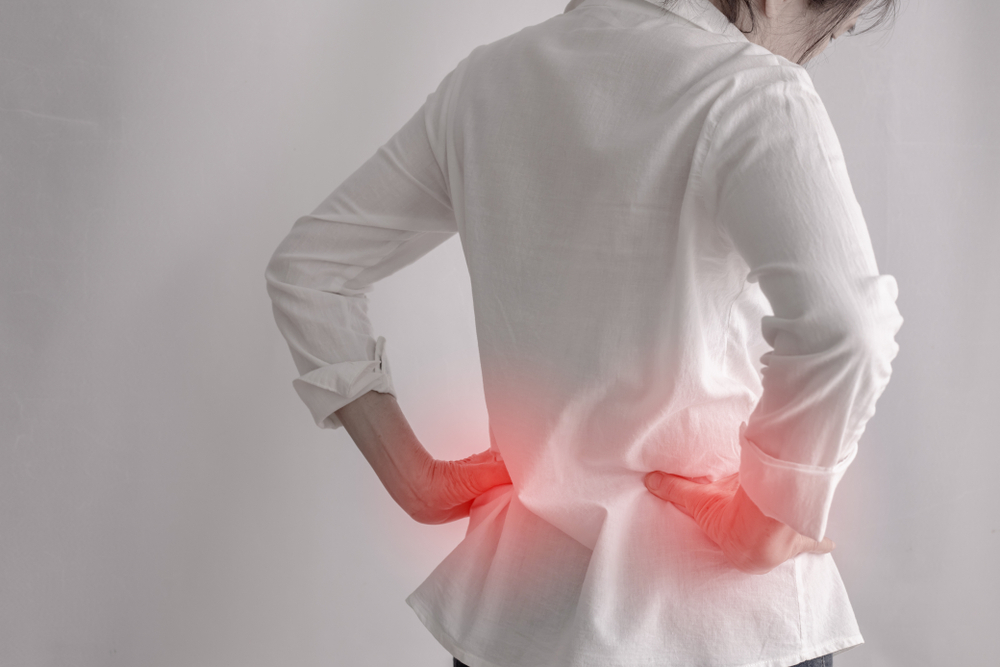
Sciatica refers to a group of symptoms caused by irritation, inflammation, or compression involving the sciatic nerve or the spinal nerves that contribute to it.
The sciatic nerve is the largest nerve in the body. It begins in the lower back and travels through the buttocks and down the back of each leg.
Sciatica may cause symptoms along this nerve pathway, including:
- Lower back pain
- Buttock pain
- Hip discomfort
- Shooting leg pain
- Burning sensations
- Numbness
- Tingling
- Leg weakness
- Pain extending into the calf or foot
Sciatica is not a diagnosis by itself. It is a description of symptoms that may be caused by a disc problem, spinal joint restriction, muscle tension, injury, or another condition affecting the lower back and surrounding nerves.
Symptoms commonly affect one side of the body, although both legs may occasionally be involved.
What Causes Sciatica?
Sciatica may develop when a spinal nerve in the lower back becomes irritated or compressed.
Common causes and contributing factors include:
- Herniated disc
- Disc bulge
- Lower back joint restrictions
- Age-related spinal changes
- Muscle spasms
- Repetitive bending or lifting
- Improper lifting technique
- Prolonged sitting
- Poor posture
- Auto accident injuries
- Sports injuries
- Slips or falls
- Pregnancy-related postural changes
- Previous lower back injuries
- Weak or deconditioned core muscles
In some patients, tight muscles in the buttock or hip region may contribute to sciatic-like symptoms. However, not every case of leg pain is true sciatica, so a proper evaluation is important.
Symptoms of Sciatica
Sciatica symptoms vary depending on the location and severity of nerve irritation.
Common symptoms include:
- Lower back pain
- Pain in one buttock
- Shooting pain down the leg
- Burning leg discomfort
- Numbness or tingling
- Pins-and-needles sensations
- Leg heaviness
- Muscle weakness
- Calf or foot pain
- Pain aggravated by sitting
- Pain when standing after sitting
- Difficulty walking
- Pain when bending or lifting
- Pain that worsens with coughing or sneezing
- Difficulty sleeping comfortably
Some patients experience mostly leg pain with little or no lower back discomfort.
Seek immediate medical attention for sciatica accompanied by loss of bowel or bladder control, numbness around the groin, rapidly worsening leg weakness, severe difficulty walking, or symptoms affecting both legs after a major injury.
Sciatica Versus General Leg Pain
Not all leg pain is sciatica.
Sciatica typically follows a nerve-related pattern that begins in the lower back or buttock and travels into the leg. It may include burning, shooting pain, numbness, tingling, or weakness.
Other causes of leg pain may include:
- Muscle strain
- Hip or knee problems
- Tendon injuries
- Joint inflammation
- Circulatory conditions
- Peripheral nerve problems
- Sports injuries
- Repetitive-use injuries
An evaluation can help determine whether your symptoms may be related to the sciatic nerve, lower back, muscles, joints, or another source.
Sciatica and Herniated Discs
A herniated disc is a common cause of sciatica.
A herniated disc occurs when softer material inside a spinal disc pushes through a weakened or torn portion of the outer disc layer. If the displaced material irritates a nearby nerve, pain may travel into the buttock and leg.
Symptoms may include:
- Lower back pain
- Shooting leg pain
- Numbness
- Tingling
- Muscle weakness
- Pain worsened by sitting, bending, coughing, or sneezing
Not every herniated disc causes sciatica, and not every case of sciatica is caused by a herniated disc.
Sciatica and Disc Bulges
A disc bulge occurs when a spinal disc extends beyond its normal boundary. If the bulging disc irritates a nerve in the lower back, it may contribute to sciatic nerve symptoms.
A disc bulge may cause:
- Lower back stiffness
- Buttock pain
- Leg pain
- Numbness or tingling
- Pain aggravated by sitting
- Reduced movement
The severity of symptoms depends more on the location of the disc change and nerve involvement than on the size of the bulge alone.
How Is Sciatica Diagnosed?
Your evaluation begins with a detailed discussion about your symptoms, medical history, daily activities, and any recent injuries.
Dr. Kline may ask:
When did the symptoms begin?
Where does the pain start?
How far does the pain travel?
Do you experience numbness or tingling?
Have you noticed leg weakness?
Does sitting make the pain worse?
Does coughing or sneezing increase the pain?
Did symptoms begin after lifting or an accident?
Have you had previous lower back problems?
Have you received imaging or treatment?
A physical examination may evaluate:
- Posture
- Lower back range of motion
- Hip movement
- Joint mobility
- Muscle tenderness
- Muscle strength
- Reflexes
- Sensation
- Balance
- Walking pattern
- Functional movement
- Signs of nerve irritation
Imaging is not necessary for every patient with sciatica. X-rays, MRI, or other diagnostic testing may be recommended when symptoms are severe, neurological changes are present, or additional information is needed.
If your condition requires advanced imaging, medical management, or evaluation by another healthcare provider, an appropriate referral may be recommended.
Chiropractic Treatment for Sciatica
Treatment depends on the cause of your symptoms, examination findings, neurological status, health history, comfort level, and treatment goals.
A personalized care plan may include:
Chiropractic Adjustments
Chiropractic adjustments may be used to improve movement in restricted joints of the lower back, pelvis, or surrounding areas.
Techniques are selected according to the patient’s condition and comfort level.
Gentle and Low-Force Techniques
Gentle, low-force, or instrument-assisted chiropractic methods may be appropriate for patients with acute pain, disc-related symptoms, or sensitivity.
Flexion-Distraction
Flexion-distraction is a gentle, table-assisted chiropractic technique that may be used for certain lower back, disc-related, and sciatic symptoms.
The technique uses controlled movement of the spine without forceful twisting.
Dry Needling
Dry needling may be used to address muscle spasms, trigger points, or tight muscles in the lower back, hips, or buttocks.
Massage Therapy
Massage therapy may help reduce muscle tension, improve circulation, and support mobility in the lower back and surrounding tissues.
Therapeutic Exercises
Exercises may be recommended to improve mobility, core stability, posture, strength, and confidence with movement.
Posture and Activity Recommendations
You may receive guidance on sitting, lifting, workstation setup, sleep position, movement breaks, and activities that may aggravate symptoms.
Treatment recommendations may be adjusted as pain, mobility, strength, and neurological symptoms change.
Benefits of Chiropractic Care for Sciatica
Depending on the cause and individual response, chiropractic care may help:
- Improve lower back mobility
- Reduce muscle tension
- Improve range of motion
- Address restricted joint movement
- Support better posture
- Improve comfort while sitting or walking
- Reduce compensatory movement patterns
- Support recovery from certain injuries
- Improve confidence with daily movement
- Address musculoskeletal factors associated with nerve irritation
Results vary, and chiropractic care cannot guarantee complete or permanent relief.
When Should You See a Chiropractor for Sciatica?
Consider scheduling an evaluation when:
- Leg pain lasts more than a few days
- Symptoms repeatedly return
- Pain begins in the lower back or buttock
- Pain travels into the thigh, calf, or foot
- You experience numbness or tingling
- Sitting worsens the pain
- Symptoms interfere with sleep or work
- Pain began after lifting or twisting
- Symptoms developed after an auto accident
- Home care has not improved your symptoms
You do not need to wait until the pain becomes severe before requesting an evaluation.
Schedule a Sciatica Evaluation in Woodbridge, VA
Sciatica can make sitting, walking, driving, working, exercising, and sleeping uncomfortable. A personalized evaluation can help determine whether your symptoms may be connected to a herniated disc, disc bulge, restricted spinal movement, muscle tension, or another source.
Kline Chiropractic & Wellness provides chiropractic care for sciatica, lower back pain, radiating leg pain, numbness, tingling, and disc-related symptoms in Woodbridge, VA.
Call Kline Chiropractic & Wellness at (703) 680-4344 or request an appointment online today.
Kline Chiropractic & Wellness
4004 Genesee Place, Suite 213
Woodbridge, VA 22192
Chiropractic care is not a substitute for emergency or primary medical care. Treatment recommendations and individual results vary. Patients with severe or progressive neurological symptoms should seek immediate medical attention.
Frequently Asked Questions
Can a chiropractor help with sciatica?
Chiropractic care may help certain cases of sciatica when restricted joint movement, muscle tension, disc-related changes, or other musculoskeletal factors are involved. Treatment should be based on an individual examination.
What does sciatica feel like?
Sciatica may feel like sharp, shooting, burning, or electric-like pain that travels from the lower back or buttock into the leg. It may also cause numbness, tingling, or weakness.
What causes sciatic nerve pain?
Sciatic nerve symptoms may be caused by a herniated disc, disc bulge, spinal joint restriction, age-related changes, muscle tension, injury, or another source of nerve irritation.
Is sciatica the same as lower back pain?
No. Lower back pain may remain localized. Sciatica usually involves symptoms that travel from the lower back or buttock into the leg.
Can a herniated disc cause sciatica?
Yes. A lumbar herniated disc may irritate a spinal nerve and cause pain, numbness, tingling, or weakness that travels into the leg.
Can a disc bulge cause sciatica?
Yes. A lumbar disc bulge may irritate a nearby nerve and contribute to sciatic nerve symptoms.
Is walking good for sciatica?
Gentle walking may help some patients maintain mobility and reduce stiffness. Activity should be adjusted based on symptoms and professional recommendations.
Does sitting make sciatica worse?
Prolonged sitting may worsen sciatica in some patients by increasing stress on the lower back and surrounding tissues.
Should I use heat or ice for sciatica?
Ice may be helpful after certain acute injuries, while heat may help relax tight muscles. The appropriate option depends on the cause and stage of the condition.
Will I need an MRI for sciatica?
Not every patient requires an MRI. Imaging may be recommended when symptoms are severe, weakness is present, treatment is not helping, or additional diagnostic information is needed.
How long does sciatica last?
The duration of sciatica varies depending on the cause, severity, nerve involvement, daily activities, and response to treatment.
When is sciatica an emergency?
Seek immediate medical attention for loss of bowel or bladder control, numbness around the groin, rapidly worsening leg weakness, severe difficulty walking, or symptoms affecting both legs.